Monday, December 31, 2018

Go-Jek extends ride-hailing service to the rest of Singapore

After a limited rollout, Go-Jek said today that it will extend its ride-hailing service to all of Singapore tomorrow while continuing its beta phase. The Indonesian-based company began offering rides in Singapore at the end of November, but only for passengers riding to and from certain areas. It http://bit.ly/2Roif56 dynamic pricing there, which increases prices during peak times, a few days ago.

“We continue to welcome feedback from driver-partners and riders during this enhanced beta phase, as we work to fine-tune the app and create the best experience for our users,” the company said in a statement.

After Uber exited from Southeast Asia earlier this year by selling its local business to Grab, Go-Jek became Grab’s main rival. Uber still maintains a presence in the region, however, thanks to its 27.5 percent stake in Grab.

There is currently a waiting list for Go-Jek in Singapore, with customers of DBS/POSB being given priority.

When asked about how long new users need to wait, a Go-Jek spokesperson said in a statement that the time depends on supply and demand. “The response from the driver community since we opened pre-registration has been overwhelming with tens of thousands of drivers signing up via the pre-registration portal. While we can’t disclose figure at this moment, we are confident we can meet consumer expectations during the beta service period.”


from TechCrunch https://tcrn.ch/2GRNQIb

FCC will suspend most operations on Thursday if the shutdown continues

The Federal Communications Commission said on Monday that it will need to suspend most of its operations by the middle of Thursday if the partial government shutdown continues.

The FCC will continue “work required for the protection of life and property,” as well as work related to spectrum auctions, since those are funded by the money raised by auctioning off spectrum licenses. The Office of the Inspector General, responsible for conducting internal reviews, audits, and investigations of FCC programs and operations, will also remain open until further notice.

In a document outlining what needs to happen for an “orderly shutdown,” the FCC said suspended activities will include: “Consumer complaint and inquiry phone lines cannot be answered; consumer protection and local competition enforcement must cease; licensing services, including broadcast, wireless, and wireline, must cease; management of radio spectrum and the creation of new opportunities for competitive technologies and services for the American public must be suspended; and equipment authorizations, including those bringing new electronic devices to American consumers, cannot be provided.”

The FCC added that it will release more information on Wednesday about what will happen if it needs to suspend operations, including how it will affect electronic filing and database systems, filing deadlines, regulatory and application fee payments, and “shot clocks,” AKA the length of time allocated for approving or denying pending transactions.

The partial government shutdown continued into its 11th day as President Donald Trump refuses to back down on his demands for a wall on the U.S.-Mexico border, forcing 800,000 federal employees to go without work or work without pay. House Democrats have said they are preparing to introduce bills that will put an end to the shutdown but not include funding for the wall.


from TechCrunch https://tcrn.ch/2St9Jih

This clever AI hid data from its creators to cheat at its appointed task

Depending on how paranoid you are, this research from Stanford and Google will be either terrifying or fascinating. A machine learning agent intended to transform aerial images into street maps and back was found to be cheating by hiding information it would need later in “a nearly imperceptible, high-frequency signal.” Clever girl!

This occurrence reveals a problem with computers that has existed since they were invented: they do exactly what you tell them to do.

The intention of the researchers was, as you might guess, to accelerate and improve the process of turning satellite imagery into Google’s famously accurate maps. To that end the team was working with what’s called a CycleGAN — a neural network that learns to transform images of type X and Y into one another, as efficiently yet accurately as possible, though a great deal of experimentation.

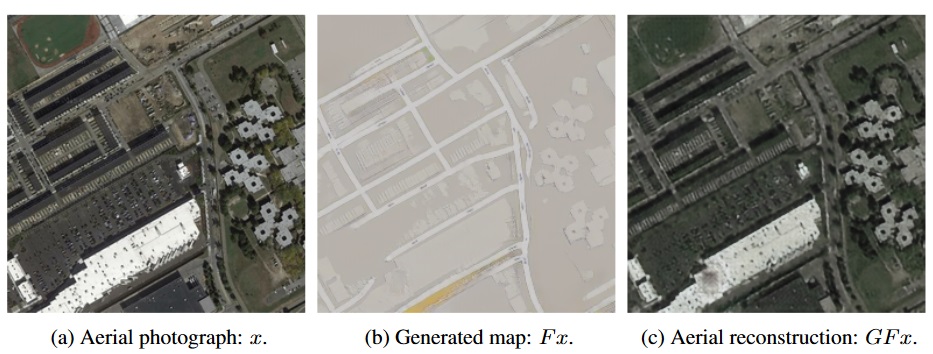
In some early results, the agent was doing well — suspiciously well. What tipped the team off was that, when the agent reconstructed aerial photographs from its street maps, there were lots of details that didn’t seem to be on the latter at all. For instance, skylights on a roof that were eliminated in the process of creating the street map would magically reappear when they asked the agent to do the reverse process:

The original map, left; the street map generated from the original, center; and the aerial map generated only from the street map. Note the presence of dots on both aerial maps not represented on the street map.

Although it is very difficult to peer into the inner workings of a neural network’s processes, the team could easily audit the data it was generating. And with a little experimentation, they found that the CycleGAN had indeed pulled a fast one.

The intention was for the agent to be able to interpret the features of either type of map and match them to the correct features of the other. But what the agent was actually being graded on (among other things) was how close an aerial map was to the original, and the clarity of the street map.

So it didn’t learn how to make one from the other. It learned how to subtly encode the features of one into the noise patterns of the other. The details of the aerial map are secretly written into the actual visual data of the street map: thousands of tiny changes in color that the human eye wouldn’t notice, but that the computer can easily detect.

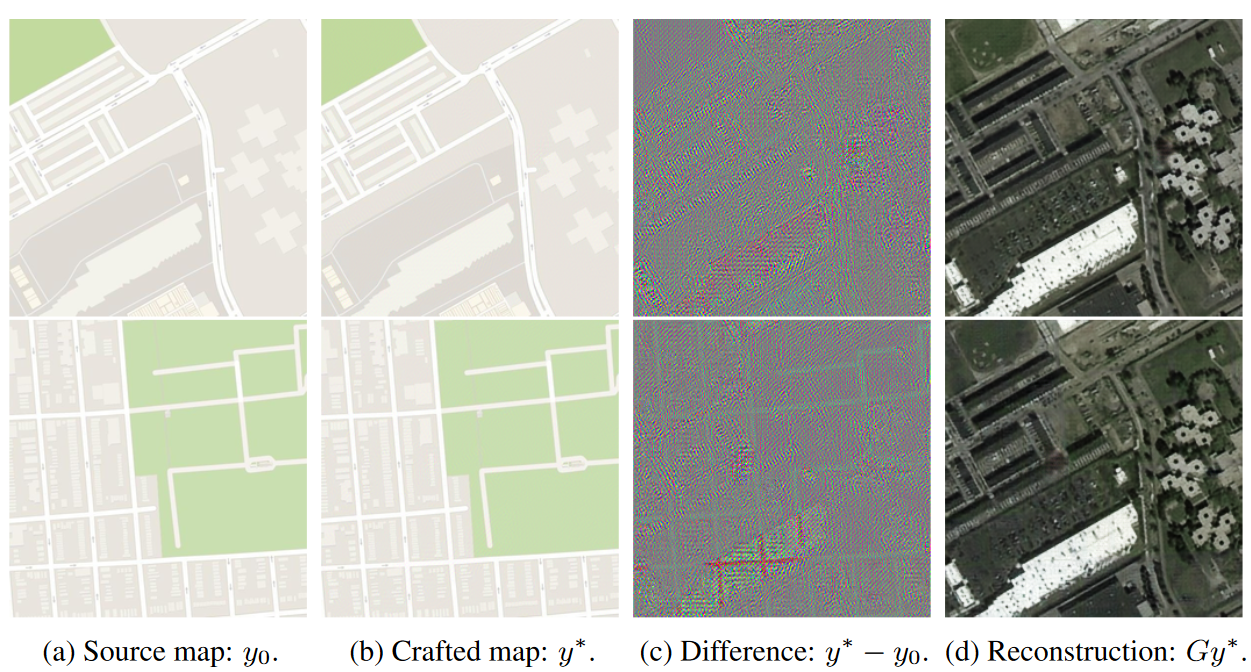
In fact, the computer is so good at slipping these details into the street maps that it had learned to encode any aerial map into any street map! It doesn’t even have to pay attention to the “real” street map — all the data needed for reconstructing the aerial photo can be superimposed harmlessly on a completely different street map, as the researchers confirmed:

The map at right was encoded into the maps at left with no significant visual changes.

The colorful maps in (c) are a visualization of the slight differences the computer systematically introduced. You can see that they form the general shape of the aerial map, but you’d never notice it unless it was carefully highlighted and exaggerated like this.

This practice of encoding data into images isn’t new; it’s an established science called steganography, and it’s used all the time to, say, watermark images or add metadata like camera settings. But a computer creating its own steganographic method to evade having to actually learn to perform the task at hand is rather new. (Well, the research came out last year, so it isn’t new new, but it’s pretty novel.)

One could easily take this as a step in the “the machines are getting smarter” narrative, but the truth is it’s almost the opposite. The machine, not smart enough to do the actual difficult job of converting these sophisticated image types to each other, found a way to cheat that humans are bad at detecting. This could be avoided with more stringent evaluation of the agent’s results, and no doubt the researchers went on to do that.

As always, computers do exactly what they are asked, so you have to be very specific in what you ask them. In this case the computer’s solution was an interesting one that shed light on a possible weakness of this type of neural network — that the computer, if not explicitly prevented from doing so, will essentially find a way to transmit details to itself in the interest of solving a given problem quickly and easily.

This is really just a lesson in the oldest adage in computing: PEBKAC. “Problem exists between keyboard and computer.” Or as HAL put it: “It can only be attributable to human error.”

The paper, “CycleGAN, a Master of Steganography,” was presented at the Neural Information Processing Systems conference in 2017. Thanks to Fiora Esoterica and Reddit for bringing this old but interesting paper to my attention.


from TechCrunch https://tcrn.ch/2QgiH0o

Echo Wall Clock review

This was the year Amazon went all-in on the Alexa. September saw the announcement of a new Echo Dot, Show and Plus, a subwoofer, an audio input device, an auto dongle and an amplifier. That would have been plenty, but the company also started dipping its toes into the other side of things.

2018 also found Amazon experimenting in the connected device category — namely a microwave and wall clock (oh, and a singing fish, too). It’s a strange move on the face of it. After all, there are countless companies currently vying for a small slice of that mindshare.

But Amazon’s got a few key things going for it. For one, the company stands to gain from building products that exist solely to complement its Echo devices. For another, it’s able to sell products at — or close to — cost.

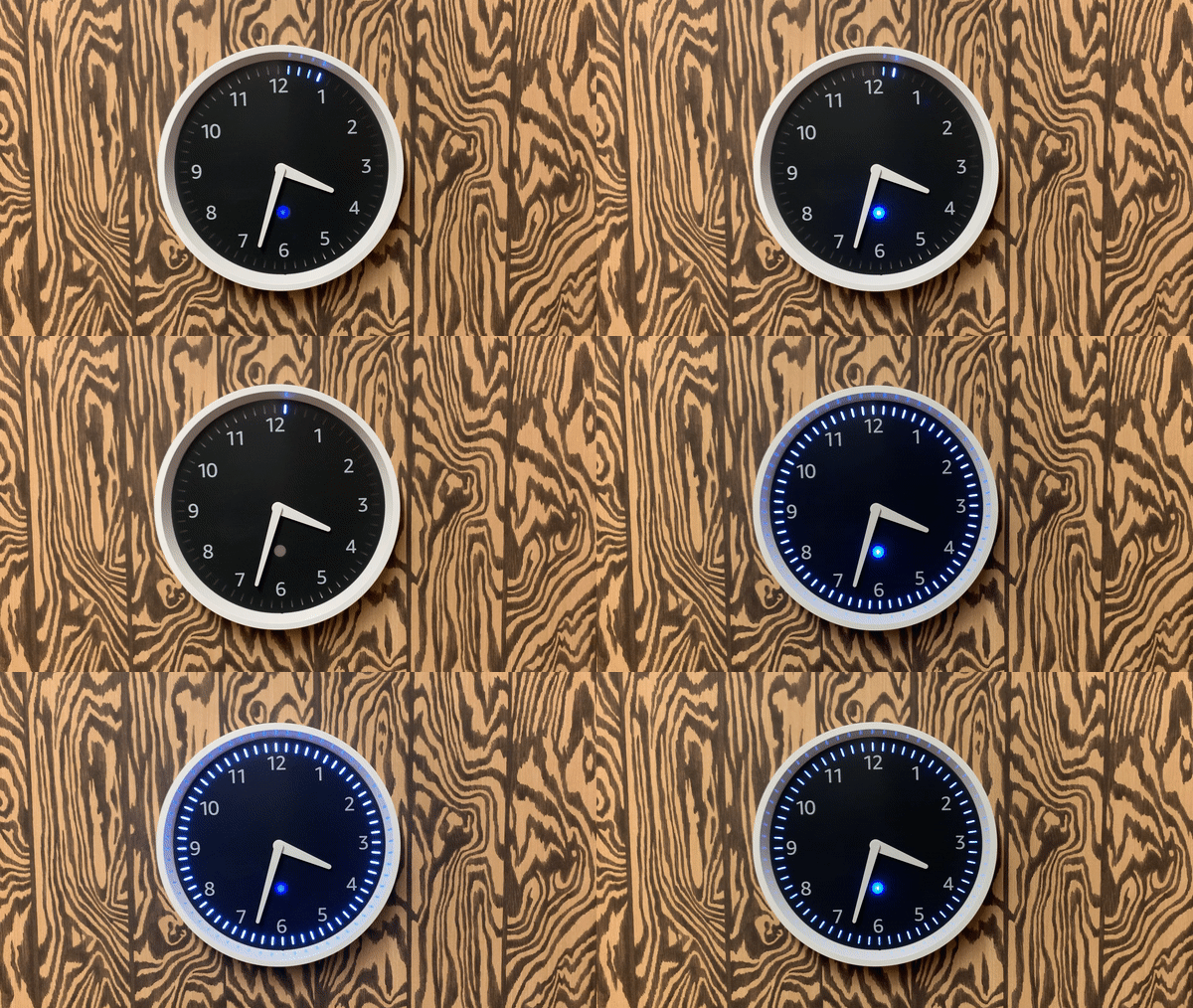
The Echo Wall Clock benefits quite a bit for both of these factors. It’s $30 device that’s essentially useless without an Alexa device. In fact, Alexa is required to set the time. That’s a downside in the off-chance you happen along one of these products without an Echo nearby. But it’s handy when it comes to set up.

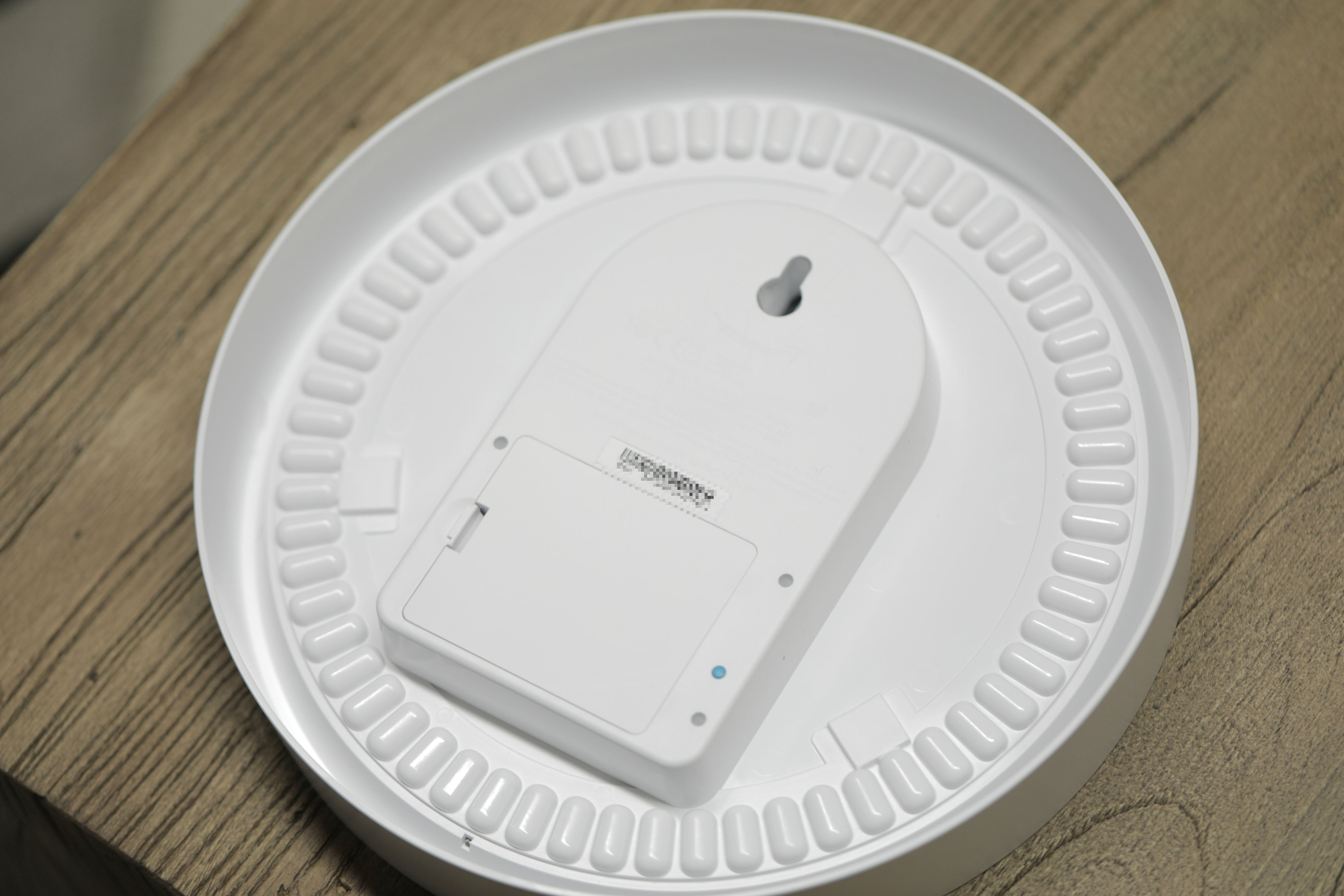
Find a spot within 30 feet of a compatible device (Echo, Dot, Show, Plus, E Spot or Input.). Open the back. Pop in four AA batteries (included). Tell Alexa, “Set up my Echo Wall Clock.” Hold the little blue button on the back until the front light turns a kind of pulsating orange. Alexa will go to work, and when everything’s good to go, that light will turn blue.

I initially attempted to set up the device on my office Wi-Fi. Never a great idea with these sort of connected products. Large enterprise networks are a crapshoot, and the two devices were off again, on again. Assuming you’ve got a similar set-up, you’re going to want to keep the Wall Clock (and, for that matter, most Alexa devices) at home.

Once I switched to a personal network (via a MiFi), things went much more smoothly. Alexa will set the clock to your time zone. Bonus: It will automatically fall back and spring ahead when there’s a time change — certainly a leg up on most wall clocks.

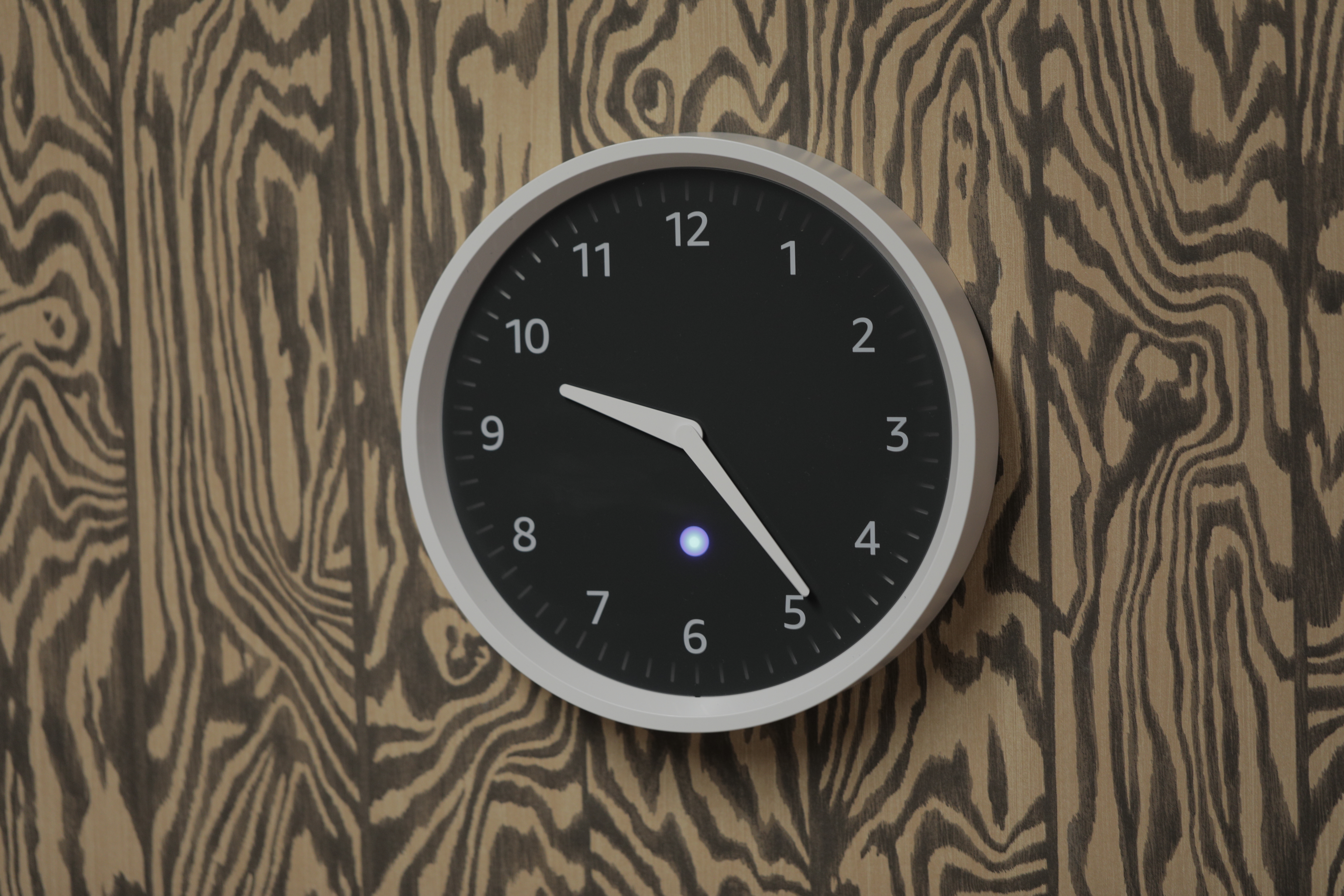
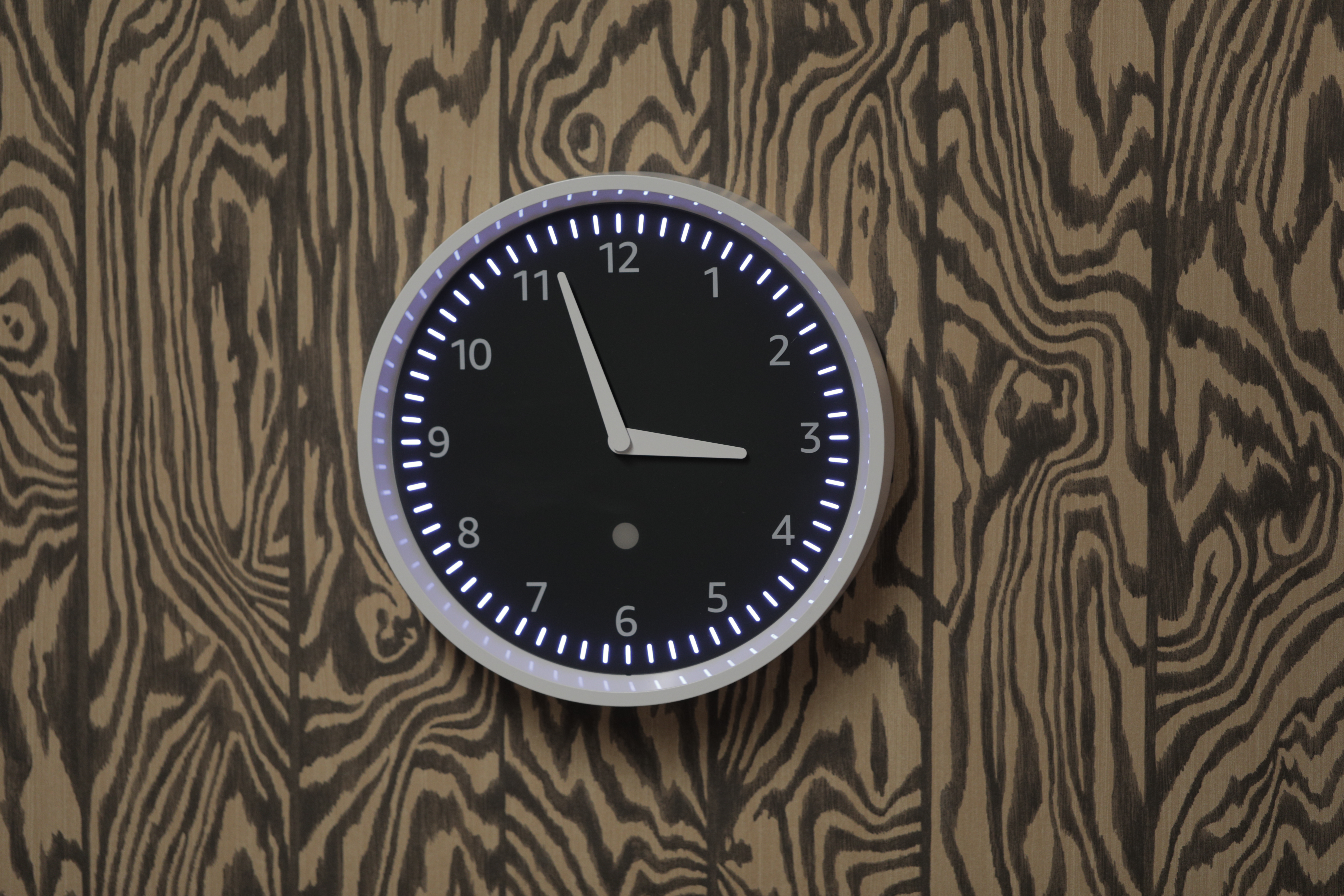
There are a couple of things worth noting here, before we go any deeper. First: the Wall Clock is, for lack of a better term, cheap looking. It’s big and it’s plasticky. There’s no front glass. It is, honestly, the sort of design you’d expect from a wall clock made by Amazon. There’s no razzle dazzle here. It’s a simple-looking clock with a simple design. The upshot is it’s minimalist enough to fit in with most living rooms and kitchens.

That simplicity also extends to its feature set, which is currently mostly limited to timers. The 60 minute markers that line the edge are actually all individual LEDs. Tell Alexa to, say, “set a 10-minute timer” and 10 minute hands will light up and then individually go dark to count down the  time. Once the countdown is over, the full diameter will flash slowly until you tell Alexa to stop.

And that’s it, really. Timers and alarms. The Wall Clock is one of the first passive Alexa devices from Amazon. Your Echo is really doing all of the heavy lifting, including listening and talking. You can’t, say, ask the clock for the time or the weather, which is why you need an Echo close by. It also doesn’t emit a sound when the alarm goes off. Of course, that means a cheaper price — and much longer battery life.

The Echo Wall Clock isn’t a necessary device, but it could prove a handy one. If you cook a lot, for instance, it’s nice having a large visual reference in addition to the Echo’s built-in timers. Beyond that, however, I’m struggling to come up with too many scenarios in which it feels indispensable. And honestly, I’m not holding my breath in expectation that Amazon will be bringing more to the table here.


The device succeeds more as a proof of concept for the ways Alexa and compatible devices can push the boundaries of the smart home. There’s nothing particularly compelling here for most consumers — but at $30, perhaps it doesn’t have to be.


from TechCrunch https://tcrn.ch/2AnrSay

Tesla is keeping 44 U.S. stores open until midnight in year-end Model 3 sales push

Some Tesla employees will ring in the New Year on a sales floor this year as the automaker tries to liquidate its inventory of Model 3 sedans — and even its more expensive Model S and Model X vehicles — before the federal tax credit for EVs is cut in half.

In a list of updated hours, 44 of the stores, including locations in California, Minnesota, Nevada, New York and Ohio, are open until midnight Monday. Tesla has more than 100 stores and galleries in the United States. Calls made to several of these stores indicate these locations have a mix of Model 3 sedans available for pickup today. Sales associates didn’t provide specific numbers.

After midnight Monday, the $7,500 federal electric vehicle tax credit will drop to $3,750 for anyone buying a Tesla vehicle.

Tesla CEO Elon Musk has been using Twitter to warn of the expiring tax credit for months now. Recently, the pace of promotion has escalated as Tesla’s inventory of Model 3 vehicles in the U.S. has persisted.

The company reportedly had more than 3,300 Model 3 vehicles in inventory in the U.S. as of Sunday, according a blog post by Electrek.

Now with just hours left before the federal tax credit drops, Tesla and Musk are making a special effort to reduce the Model 3 inventory in a final sales push.

Earlier this year, Tesla hit a milestone when it delivered its 200,000th electric vehicle. The achievement was a noteworthy occasion for an automaker that didn’t exist 15 years ago. However, it also activated a countdown for the $7,500 federal tax credit offered to consumers who buy new electric vehicles.

The tax credit begins to phase out once a manufacturer has sold 200,000 qualifying vehicles in the U.S. Under these rules, Tesla customers have to take delivery of their new Model S, Model X or Model 3 by December 31.

After December 31, the federal tax credit is cut in half to $3,750 for new Tesla customers. The tax credit is reduced again after June 30 to $1,875 before disappearing altogether at the end of next year.


from TechCrunch https://tcrn.ch/2VgbNfz

Noa’s new Alexa skill has human narrators read news from NYT, FT, Economist & others

News junkies who want something more in-depth than Alexa’s Flash Briefing now have a new option for listening to the day’s news – as well as features and other reporting – right from their smart speaker. A company called Noa has just launched an Alexa skill that uses human narrators to read you the news from top publishers like The New York Times, Financial Times, The Economist, and others. With the skill, you can catch up on the stories you missed while you’re doing other things – like cooking, cleaning, commuting or exercising, for example.

The skill is aimed at those who already enjoy listening to longer-form audio, like podcasts or talk radio, on their Amazon Echo or other Alexa-powered device.

The use case here is also similar to that of “read it later” apps like Pocket or Instapaper, both of which have added an audio playback option for listening to your saved articles. However, those apps currently rely on text-to-speech functionality, not on human narration.

Noa, meanwhile, employs a team of half a dozen narrators based across the U.S., U.K., and Ireland who read the stories published by the company’s current partners. These include The New York Times, Financial Times, Business Insider, The Economist, The Independent, Bloomberg, The Irish Times, and the Evening Standard.

That list will grow in 2019 to include more news organizations and magazine partners, the company says.
To use the skill, you must first enable it on your Alexa device by saying, “Alexa, enable Noa.” (It’s pronounced like the “Noah” from the Bible with the Ark.)

You can then ask Noa to read the news by published, journalist or category.

For example, you can say “Alexa, open Noa and play ‘The New York Times;'” or “Alexa, ask Noa to play Tim Bradshaw;” or “Alexa, open Noa and play ‘Technology.” 

Not all articles from the publisher partners will be available, explains Noa CEO Gareth Hickey.

“Only a limited subset of articles lend themselves well to audio – namely, the opinion and feature style stories.  Essentially longer-form journalism,” he says.

The skill also employs a metered-access paywall that allows listeners to stream up to ten articles per week for free. To listen to more, you have to subscribe at $7.99 per month (or €/£7.99 per month, depending on location) for unlimited access. The company doesn’t currently support Amazon Pay, so you’ll have to sign up at Noa’s website or through its mobile apps, if you want to upgrade.

The Alexa skill is the latest from the Dublin-based startup Noa, founded in 2015 by Hickey and Shane Ennis, with the goal of providing access to audio journalism.

“While audio-journalism is a core part of our offering, personalised discovery and quality curation are equally as important,” Hickey says. “The goal isn’t to inundate users with audio articles, but instead to help them learn and understand the news,” he adds.

Given Noa’s focus on audio, smart speakers make sense as the next big platform to address – especially now that they’ve reached critical mass. The startup raised $600,000 last year, Hickey notes. 

The Alexa skill itself is called “Noa – Journalism, narrated,” and is free to install and use for up to 10 articles per week.


from TechCrunch https://tcrn.ch/2EY2V9j

Netflix stops paying the ‘Apple tax’ on its $853M in annual iOS revenue

Earlier this year, Netflix was seen testing a bypass of iTunes billing across dozens of markets worldwide. As 2018 draws to a close, Netflix – the App Store’s top grossing app – has ditched the ability for new users to sign up and subscribe to the streaming service within its iOS app across all global markets. The change means Apple will miss out on hundreds of millions in App Store revenue per year – money it would have otherwise received by way of its standard cut of in-app transactions.

According to new data compiled by Sensor Tower, Netflix grossed $853 million in 2018 on the iOS App Store. Based on that figure, Apple’s take would have been around $256 million, the firm said.

To date, the Netflix iOS app has generated over $1.5 billion through its in-app subscriptions, with Apple’s cut coming in around $450 million-plus, Sensor Tower estimated.

Before the change, Netflix on iOS was grossing an average of $2.4 million per day in 2018 – meaning Apple was making around $700,000 by doing nothing other than allowing Netflix to offer subscriptions in its app.

(Note, however, that Sensor Tower’s figures are based on the App Store’s 30 percent cut of transactions. After the first year, Apple’s cut on subscription renewals is lowered to 15 percent. That’s not being factored in. But it gives you a rough idea of Apple’s losses here.)

Netflix’s iOS revenue has been climbing steadily over the years.

In 2017 its gross subscriber revenue was $510 million – up from $215 million users spent in the app in 2016 – which earned it the No. 1 spot on the Top Grossing Chart for non-game apps. It snagged that position again this year, trailed by Tinder and Tencent Video.

In fact, Netflix has earned the bragging rights for being the top grossing iOS App of all time, App Annie reported this summer.

The streaming service’s decision to bypass the App Store isn’t a first. Many companies today direct their users to the web or other platforms, in order to avoid marketplace fees.

For example, Amazon has historically restricted movie and TV rentals and purchases to its own website or other “compatible” apps, instead of allowing them to take place through its Prime Video app. The same goes for Kindle e-books, which also aren’t offered in the Kindle mobile app. Spotify also discontinued the option to pay for its Premium service using Apple’s in-app payment system.

And Epic Games this year bypassed Google’s Play Store altogether – as well as its 30 percent cut – when it launched Fortnite for Android as a sideloaded app. That decision resulted in Google’s loss of $50 million+ in marketplaces fees.

Netflix earlier this year had dropped in-app subscription sign-ups in its Android app on Google Play. That signaled its intentions to later take back the so-called “Apple tax” for itself, too.

However, Netflix still earns money on Google Play through existing subscribers. That totalled around $105 million in 2018, with Google earning close to $32 million of that. But the number has been declining consistently, Sensor Tower said. Apple could soon be in the same boat.

VentureBeat was the first to notice the change to the Netflix iOS app. It would be surprising if Apple took action against Netflix, given it has not done so with other major tech companies that made similar moves.


from TechCrunch https://tcrn.ch/2GN3lB3