Friday, January 31, 2020

Maxar and NASA will demonstrate orbital spacecraft assembly with a new robotic arm

NASA has awarded Maxar an estimated $142 million contract to demonstrate in-orbit spacecraft refueling and assembly of new components using a custom robotic platform in space.

The space infrastructure dexterous robot, or SPIDER, program will be part of NASA’s Restore-L mission to demonstrate automation of proposed orbital tasks like reconfiguring or repairing a satellite or manufacturing new components from scratch.

The first thing the Restore-L spacecraft will do is show that it can synchronize with, capture, connect with, refuel a satellite in orbit, then release it into a new orbit. Afterwards the craft will use a Maxar-built robotic arm to assemble a multi-panel antenna reflector, then test it.

Last, a separate piece of hardware, Tethers Unlimited’s MakerSat, will extrude a beam some 10-20 meters long, which will be inspected by the parent satellite, then detached and reattached to demonstrate its robustness.

There’s no hard timeline for the mission yet, so don’t expect anything for at least a year or two. This isn’t a small-scale experiment that can fly up next week in an Electron — it’s a big, expensive one that will likely take up most of a large rocket’s payload.

Although it’s only a demonstration, a Maxar representative pointed out that it is very close to what would be an operational system on other satellites in the future. It has also been previously demoed on the ground, though of course that’s no substitute for the real thing.

Robotic arms are something of a specialty for Maxar, which has delivered six total for NASA, including the one on Insight (currently on the Red Planet) and the Mars 2020 Rover (due to receive its official, inspirational name any day now).

We’ll have Maxar’s head of space robotics on stage at TC Sessions: Robotics+AI in March at UC Berkeley, so be sure to join us there if you’d like to hear more about the business of building space robots.


from TechCrunch https://ift.tt/2tgTXzM

Customer feedback is a development opportunity

Online commerce accounted for nearly $518 billion in revenue in the United States alone last year. The growing number of online marketplaces like Amazon and eBay will command 40% of the global retail market in 2020. As the number of digital offerings — not only marketplaces but also online storefronts and company websites — available to consumers continues to grow, the primary challenge for any online platform lies in setting itself apart.

The central question for how to accomplish this: Where does differentiation matter most?

A customer’s ability to easily (and accurately) find a specific product or service with minimal barriers helps ensure they feel satisfied and confident with their choice of purchase. This ultimately becomes the differentiator that sets an online platform apart. It’s about coupling a stellar product with an exceptional experience. Often, that takes the form of simple, searchable access to a wide variety of products and services. Sometimes, it’s about surfacing a brand that meets an individual consumer’s needs or price point. In both cases, platforms are in a position to help customers avoid having to chase down a product or service through multiple clicks while offering a better way of comparing apples to apples.

To be successful, a company should adopt a consumer-first philosophy that informs its product ideation and development process. A successful consumer-first development resides in a company’s ability to expediently deliver fresh features that customers actually respond to, rather than prioritize the update that seems most profitable. The best way to inform both elements is to consistently collect and learn from customer feedback in a timely way — and sometimes, this will mean making decisions for the benefit of consumers versus what is in the best interest of companies.


from TechCrunch https://ift.tt/36OIB3I

Legacy, a sperm testing and freezing service, just raised $3.5 million to send the message to men: get checked

Legacy, a male fertility startup, has just raised a fresh, $3.5 million in funding from Bill Maris’s San Diego-based venture firm, Section 32, along with Y Combinator and Bain Capital Ventures, which led a $1.5 million seed round for the Boston startup last year.

We talked earlier today with Legacy’s founder and CEO Khaled Kteily about his now two-year-old, five-person startup and its big ambitions to become the world’s preeminent male fertility center. Our biggest question was how Legacy and similar startups convince men — who are generally less concerned with their fertility than women — that they need the company’s at-home testing kits and services in the first place.

“They should be worried about [their fertility],” said Kteily, a former healthcare and life sciences consultant with a masters degree in public policy from the Harvard Kennedy School. “Sperm counts have gone down 50 to 60 percent over the last 40 years.” More from our chat with Legacy, a former TechCrunch Battlefield winner, follows; it has been edited lightly for length.

TC: Why start this company?

KK: I didn’t grow up wanting to be the king of sperm [laughs]. But I had a pretty accident — a second-degree burn on my legs after having four hot Starbuck’s teas spill on my lap in a car — and between that and a colleague at the Kennedy Center who’d been diagnosed with cancer and whose doctor suggested he freeze his sperm ahead of his radiation treatments, it just clicked for me that maybe I should also save my sperm. When I went into Cambridge to do this, the place was right next to the restaurant Dumpling House and it was just very awkward and expensive and I thought, there must be a better way of doing this.

TC: How do you get started on something like this?

KK: This was before Ro and Hims began taking off, but people were increasingly comfortable doing things from the own homes, so I started doing research around the idea. I joined the American Society of Reproductive Medicine. I started taking continuing education classes about sperm…

TC: Women are under so much pressure from the time they turn 30 to monitor their fertility. Aside from extreme circumstances, as with your friend, do men really think about testing their sperm? 

KK: Men should be worried about it, and they should be taking responsibility for it. What a lot of folks don’t know in for every one in seven couples that are actively trying to get pregnant, the man is equally responsible [for their fertility struggles]. Women are taught about their fertility but men aren’t, yet the quality of their sperm is degrading over the years. Sperm counts have gone down by 50 to 60 percent over last 40 years, too.

TC: Wait, what? Why?

KK: [Likely culprits are] chemicals in plastics, chemicals in what we eat eat and drink, changes in lifestyle; we move less and eat more, and sperm health relates to overall health. I also think mobile phones are causing it. I will caveat this by saying there’s been mixed research, but I’m convinced that cell phones are the new smoking in that it wasn’t clear that smoking was as dangerous as it is when the research was being conducted by companies that benefited by [perpetuating cigarette use]. There’s also a generational decline in sperm quality [to consider]; it poses increased risk to the mother but also the child, as the risk of gestational diabetes goes up, the rate of autism, and other congenital conditions.

TC: You’re selling directly to consumers. Are you also working with companies to incorporate your tests in their overall wellness offerings?

KK: We’re investing heavily in business-to-business and expect that to be a huge acquisition channel for us. We can’t share any names yet, but we just signed a big company last week and have a few more in the works. These are mostly Bay Area companies right now; it’s an area where our experience as a YC alum was valuable because of the founders who’ve gone through and now run large companies of their own.

TC: When you’re talking with investors, how do you describe the market size? 

KK: There are four million couples that are facing fertility challenges and in all cases, we believe the man should be tested. So do [their significant others]. Almost half of purchases [of our kits] are by a female partner. We also see men in the military freezing their sperm before being deployed, same-sex couples who plan to use a surrogate at some point, and transgender patients who are looking at a life-changing [moment] and want to preserve their fertility before they start the process. But we see this as something that every man might do as they go off to college, and investors see that bigger picture.

TC: How much do the kits and storage cost?

KK: The kit cost $195 up front, and if they choose to store their sperm, $145 a year. We offer different packages. You can also spend $1,995 for two deposits and 10 years of storage.

TC: Is one or two samples effective? According to the Mayo Clinic, sperm counts fluctuate meaningfully from one sample to the next, so they suggest semen analysis tests over a period of time to ensure accurate results.

KK: We encourage our clients to make multiple deposits. The scores will be variable, but they’ll gather around an average.

TC: But they are charged for these deposits separately?

KK: Yes.

TC: And what are you looking for?

KK: Volume, count, concentration, motility, and morphology [meaning the shape of the sperm].

TC: Who, exactly, is doing the analysis and handling the storage?

KK: We partner with Andrology Labs in Chicago on analysis; it’s one of the top fertility labs in the country. For storage, we partner with a couple of cryo-storage providers in different geographies. We divide the samples into four, then store them in two different tanks within each of two locations. We want to make sure we’re never in a position where [the samples are accidentally destroyed, as has happened at clinics elsewhere].

TC: I can imagine fears about these samples being mishandled. How can you assure customers this won’t happen?

KK: Trust and legitimacy are core factors and a huge area of focus for us. We’re CPPA and HIPAA compliant. All [related data] is encrypted and anonymized and every customer receives a unique ID [which is a series of digits so that even the storage facilities don’t know whose sperm they are handling]. We have extreme redundancies and processes in place to ensure that we’re handling [samples] in the most scientifically rigorous way possible, as well as ensuring the safety and privacy of each [specimen].

TC: How long can sperm be frozen?

KK: Indefinitely.

TC: How will you use all the data you’ll be collecting?

KK: I could see us entering into partnerships with research institutions. What we won’t do is sell it like 23andMe.


from TechCrunch https://ift.tt/2vxBxeO

You need a minimum viable company, not a minimum viable product

Hi, I’m Ann.

I was one of the first investors in Lyft, Refinery29 and Xamarin. I’ve been on the Midas List for the past three years and was recently named on The New York Times’ list of The Top 20 Venture Capitalists. In 2008, I co-founded Floodgate, one of the first seed-stage VC funds in Silicon Valley. Unlike most funds, we invest exclusively in seed, making us experts in finding product-market fit and building a minimum viable company. Seed is fundamentally different from later stages, so we’ve made it more than a specialty: It’s all we do. Each of our partners sees thousands of companies every year before electing to invest in only the top three or four.

For the past 11 years, I’ve invested at the inception phase of startups. We’ve seen startups go wildly right (Lyft, Refinery29, Twitch, Xamarin) and wildly wrong. When I reflect on the failures, the root cause inevitably stems from misconceptions around the nature of product-market fit.

True product-market fit is a minimum viable company

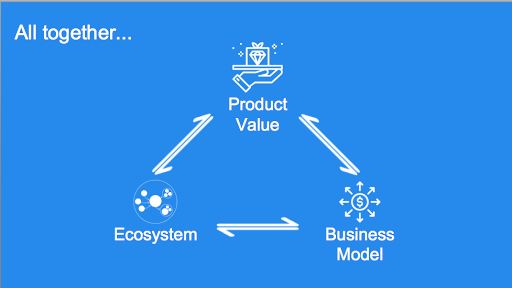
Before attempting to scale your minimum viable product, you should focus on cultivating your minimum viable company. Nail down your value proposition, find your place in the broader ecosystem and craft a business model that adds up. In other words, true product-market fit is actually the magical moment when three elements click together:

To have built a minimum viable company, these three elements must work in concert together:

  • People must value your product enough to be willing to pay for it. This value also determines how you package your product to the world (freemium versus free to pay versus enterprise sales).
  • Your business model and pricing must fit your ecosystem. They must also generate enough sales volume and revenue to sustain your business.
  • Your product’s value must satisfy the needs of the ecosystem and the ecosystem needs to accept your product.

Many entrepreneurs conceptualize product-market fit as the point where some subset of customers love their product’s features. This conceptualization is dangerous. Many failing companies have features that customers loved. Some even have multiple beloved features! Great features constitute only one-half of one-third of the whole puzzle. To have created a minimum viable company, a company needs all three of these elements — value propositions, business model and ecosystem — working in concert. 

So founders take heed…

Moving into “growth mode” while missing any of these elements is building your company on an unsound foundation.

Founders who tune out the latest tweet cycle on “the secrets to raising Series A” and focus instead on the intricacies of their own business will find that product-market fit is a predictable, achievable phenomenon. On the other hand, founders who prematurely focus on growth without knowing the basic ingredients of their minimum viable company often fuel an addictive and destructive cycle around their business’ fake growth, acquiring non-optimal users that contribute to their company’s destruction.

Read an extended version of this article on Extra Crunch.


from TechCrunch https://ift.tt/36HwTbf

You need a minimum viable company, not a minimum viable product

Hi, I’m Ann.

I was one of the first investors in Lyft, Refinery29 and Xamarin. I’ve been on the Midas List for the past three years and was recently named on The New York Times’ list of The Top 20 Venture Capitalists. In 2008, I co-founded Floodgate, one of the first seed-stage VC funds in Silicon Valley. Unlike most funds, we invest exclusively in seed, making us experts in finding product-market fit and building a minimum viable company. Seed is fundamentally different from later stages, so we’ve made it more than a specialty: It’s all we do. Each of our partners sees thousands of companies every year before electing to invest in only the top three or four.

For the past 11 years, I’ve invested at the inception phase of startups. We’ve seen startups go wildly right (Lyft, Refinery29, Twitch, Xamarin) and wildly wrong. When I reflect on the failures, the root cause inevitably stems from misconceptions around the nature of product-market fit.

The magic of product-market fit

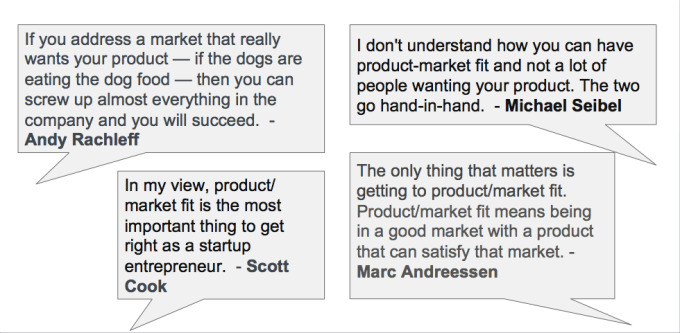
Most successful entrepreneurs and VCs agree that product-market fit is the defining quality of an early-stage startup. Getting to product-market fit allows you to succeed even if you aren’t optimized on other fronts.

Most entrepreneurs conceptualize product-market fit as the point where some subset of customers love their product’s features. At Floodgate, we forensically analyzed companies that died and concluded this conceptualization is wrong. Many failing companies had features that customers loved. Some of these companies even had multiple beloved features! We discovered that having customers love the product is merely a part of product-market fit, not the entire thing. This raises the question: What were they lacking?


from TechCrunch https://ift.tt/2u8gDmi

Carriers ‘violated federal law’ by selling your location data, FCC tells Congress

More than a year and a half after wireless carriers were caught red-handed selling the real-time location data of their customers to anyone willing to pay for it, the FCC has determined that they committed a crime. An official documentation of exactly how these companies violated the law is forthcoming.

FCC Chairman Ajit Pai shared his finding in a letter to Congressman Frank Pallone (D-NJ), who chairs the Energy and Commerce Committee that oversees the agency. Rep. Pallone has been active on this and prodded the FCC for updates late last year, prompting today’s letter. (I expect a comment from his office shortly and will add it when they respond.)

“I wish to inform you that the FCC’s Enforcement Bureau has completed its extensive investigation and that it has concluded that one or more wireless carriers apparently violated federal law,” Pai wrote.

Extensive it must have been, since we first heard of this egregious breach of privacy in May of 2018, when multiple reports showed that every major carrier (including TechCrunch’s parent company Verizon) was selling precise location data wholesale to resellers who then either resold it or gave it away. It took nearly a year for the carriers to follow through on their promises to stop the practice. And now, 18 months later, we get the first real indication that regulators took notice.

“It’s a shame that it took so long for the FCC to reach a conclusion that was so obvious,” said Commissioner Jessica Rosenworcel in a statement issued alongside the Chairman’s letter. She has repeatedly brought up the issue in the interim, seemingly baffled that such a large-scale and obvious violation was going almost completely unacknowledged by the agency.

Commissioner Brendan Starks echoed her sentiment in his own statement: “These pay-to-track schemes violated consumers’ privacy rights and endangered to their safety. I’m glad we may finally act on these egregious allegations. My question is: what took so long?”

Chairman Pai’s letter explains that “in the coming days” he will be proposing a “Notice of Apparent Liability for Forfeiture,” or several of them. This complicated-sounding document is basically the official declaration, with evidence and legal standing, that someone has violated FCC rules and may be subject to a “forfeiture,” essentially a fine.

Right now that is all the information anyone has, including the other Commissioners, but the arrival of the notice will no doubt make things much clearer — and may help show exactly how seriously the agency took this problem and when it began to take action.

Disclosure: TechCrunch is owned by Verizon Media, a subsidiary of Verizon Wireless, but this has no effect on our coverage.


from TechCrunch https://ift.tt/2GJBgrw

Tech companies, we see through your flimsy privacy promises

There’s a reason why Data Privacy Day pisses me off.

January 28 was the annual “Hallmark holiday” for cybersecurity, ostensibly a day devoted to promoting data privacy awareness and staying safe online. This year, as in recent years, it has become a launching pad for marketing fluff and promoting privacy practices that don’t hold up.

Privacy has become a major component of our wider views on security, and it’s in sharper focus than ever as we see multiple examples of companies that harvest too much of our data, share it with others, sell it to advertisers and third parties and use it to track our every move so they can squeeze out a few more dollars.

But as we become more aware of these issues, companies large and small clamor for attention about how their privacy practices are good for users. All too often, companies make hollow promises and empty claims that look fancy and meaningful.


from TechCrunch https://ift.tt/2GDH8CO