French startup Ankorstore has raised a $29.9 million Series A round (€25 million) with Index Ventures leading the round. Existing investors GFC, Alven and Aglaé are also participating.
Ankorstore is building a wholesale marketplace that connects independent shop owners with brands selling household supplies, maple syrup, headbands, bath salts, stationery items and a lot more. That list alone should remind you of neighborhood stores that sell a ton of cutesy stuff that you don’t necessarily need but that tend to be popular.
The company works with 2,000 brands and 15,000 shops. And the startup isn’t just connecting buyers and sellers as it has a clear set of rules. For instance, the minimum first order is €100, which means that you can try out new products without ordering hundreds of items at once.
By default, Ankorstore withdraws the money 60 days after placing an order. Brands get paid upon delivery. And of course, buying from several brands through Ankorstore should simplify your admin tasks.
Ankorstore is currently live in eight countries — France, Spain, Austria, Germany, Belgium, Holland, Switzerland and Luxembourg. France is the biggest market followed by Germany. Up next, the startup plans to launch in the U.K. in 2021.
In many ways, Ankorstore reminds me of Faire, the wholesale marketplace that has raised hundreds of millions of dollars in the U.S.
“There are a number of different retail marketplaces connecting retailers with makers and brands. Where we believe we differ is in our clear focus on the independent shop owner, offering the tools and the terms that make it really easy and cost-effective to discover and access some of the most desirable up-and-coming brands,” Ankorstore co-founder Pierre-Louis Lacoste said.
Given that the startup is working with small suppliers, chances are they’re only selling their products in Europe. So there should be enough room for a European leader in that space that I would describe as wholesale Etsy-style marketplaces with a strong focus on curation.
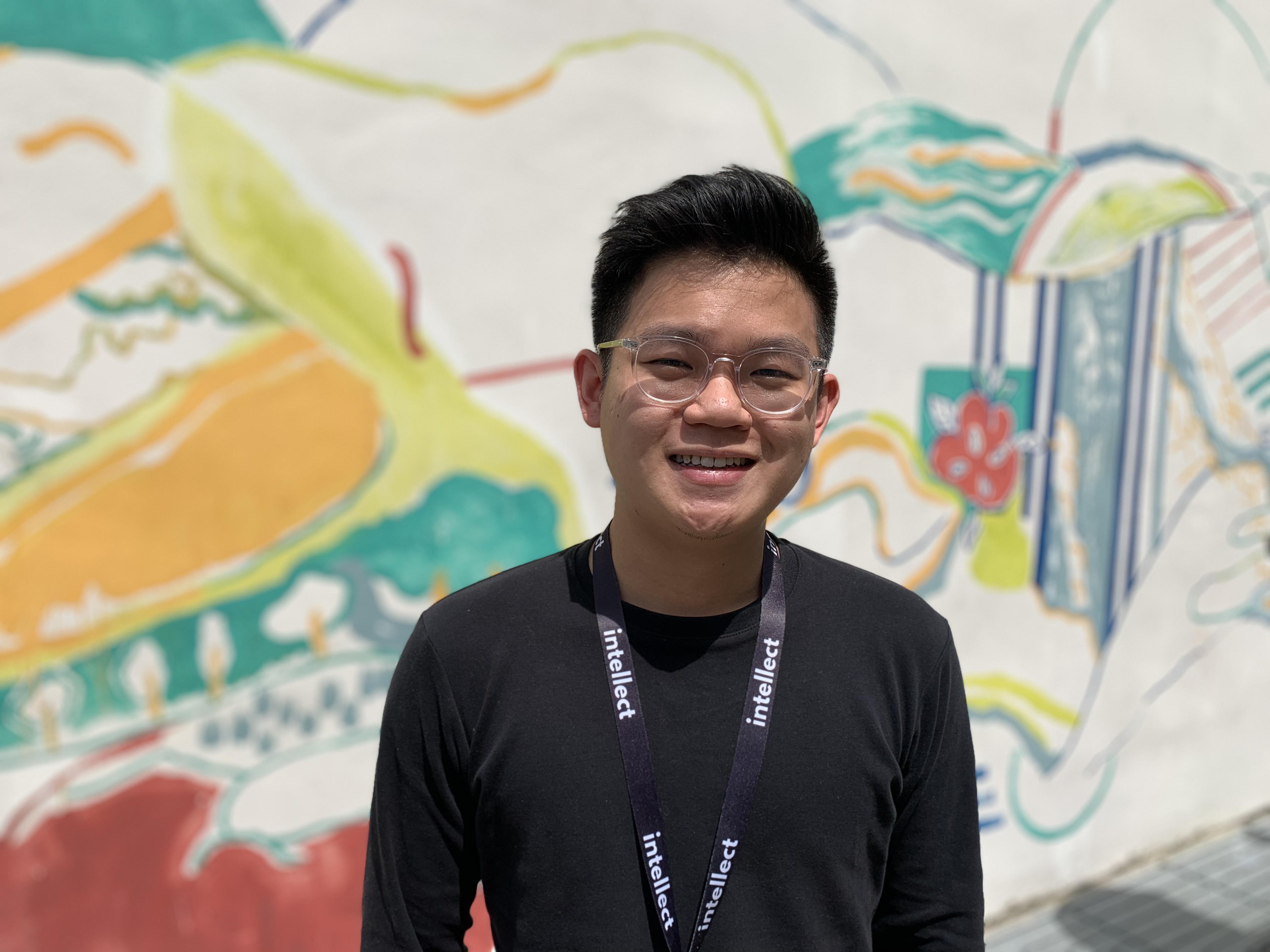
Theodoric Chew, co-founder and chief executive officer of mental health app Intellect
Intellect, a Singapore-based startup that wants to lower barriers to mental health care in Asia, says it has reached more than one million users just six months after launching. Google also announced today that the startup’s consumer app, also called Intellect, is one of its picks for best personal growth apps of 2020.
The company recently closed an undisclosed seed round led by Insignia Ventures Partners. Angel investors including e-commerce platform Carousell co-founder and chief executive officer Quek Siu Rui; former Sequoia partner Tim Lee; and startup consultancy xto10x’s Southeast Asia CEO J.J. Chai also participated.
In a statement, Insignia Ventures Partners principal Samir Chaibi said, “In Intellect, we see a fast-scaling platform addressing a pain that has become very obvious amidst the COVID-19 pandemic. We believe that pairing clinically-backed protocols with an efficient mobile-first delivery is the key to break down the barriers to access for millions of patients globally.”
Co-founder and chief executive officer Theodoric Chew launched Intellect earlier this year because while there is a growing pool of mental wellness apps in the United States and Europe that have attracted more funding during the COVID-19 pandemic, the space is still very young in Asia. Intellect’s goal is encourage more people to incorporate mental health care into their daily routines by lowering barriers like high costs and social stigma.
Intellect offers two products. One is a consumer app with self-guided programs based on cognitive behavioral therapy techniques that center on issues like anxiety, self-esteem or relationship issues.
The other is a mental health platform for employers to offer as a benefit and includes a recently launched telehealth service called Behavioural Health Coaching that connects users with mental health professionals. The service, which includes one-on-one video sessions and unlimited text messaging, is now a core part of Intellect’s services, Chew told TechCrunch.
Intellect’s enterprise product now reaches 10,000 employees, and its clients include tech companies, regional operations for multinational corporations and hospitals. Most are located in Singapore, Hong Kong, Indonesia and India, and range in size from 100 to more than 3,000 employees.
For many small- to mid-sized employers, Intellect is often the first mental health benefit they have offered. Larger clients may already have EAP (employee assistance programs), but Chew said those are often underutilized, with an average adoption rate of 1% to 2%. On the other hand, he said Intellect’s employee benefit program sees an average adoption rate of 30% in the first month after it is rolled out at a company.
Chew added that the COVID-19 pandemic has prompted more companies to address burnout and other mental health issues.
“In terms of larger trends, we’ve seen a huge spike in companies across the region having mental health and wellbeing of their employees being prioritized on their agenda,” said Chew. “In terms of user trends, we see a significantly higher utilization in work stress and burnout, anxiety and relationship-related programs.”
Intellect’s seed round will be used to expand in Asian markets and to help fund clinical research studies it is currently conducting with universities and organizations in Singapore, Australia and the United Kingdom.
Nearly all of China’s largest internet firms have established a presence in online grocery. Just this week, news arrived that Alibaba co-led the $196 million C3 funding round of Nice Tuan, the two-year-old grocery group-buying firm’s fourth round year to date.
People in China shop online for almost everything, including groceries. At first, grocery e-commerce appears to have caught on mainly among the digitally-savvy who have grown reliant on the convenience of e-commerce and don’t mind paying a bit more for delivery. Many elderly shoppers, on the other hand, still prefer visiting traditional wet markets where ingredients are generally cheaper.
Now tech companies in China are scrambling to capture grocery shoppers of all ages. A new business model that’s getting a lot of funding is that of Nice Tuan, the so-called community group buying.
In conventional grocery e-commerce, an intermediary platform like Alibaba normally connects individual shoppers to an array of merchants and offers doorstep delivery, which arrives normally within an hour in China.
A community group-buying, in comparison, relies on an army of neighborhood-based managers — often housewives looking for part-time work — to promote products amongst neighbors and tally their orders in group chats, normally through the popular WeChat messenger. The managers then place the group orders with suppliers and have the items delivered to pick-up spots in the community, such as a local convenience store.
It’s not uncommon to see piles of grocery bags at corner stores wating to be fetched these days, and the model has inspired overseas Chinese entrepreneurs to follow suit in America.
Even in China where e-commerce is ubiquitous, the majority of grocery shopping still happens offline. That’s changing quickly. The fledgling area of grocery group-buying is growing at over 100% year-over-year in 2020 and expected to reach 72 billion yuan ($11 billion) in market size, according to research firm iiMedia.
It sounds as if grocery group-buying and self-pickup is a step back in a world where doorstep convenience is the norm. But the model has its appeal. Texting orders in a group chat is in a way more accessible for the elderly, who may find Chinese e-commerce apps, often overlaid with busy buttons and tricky sales rules, unfriendly. With bulk orders, sales managers might get better bargains from suppliers. If a group-buying company is ambitious, it can always add last-mile delivery to its offering.
Chinese tech giants are clearly bullish about online grocery and diversifying their portfolios to make sure they have a skin in the game. Tencent is an investor in Xingsheng Youxuan, Nice Tuan’s major competitor. Food delivery service Meituan has its own grocery arm, offering both the traditional digital grocer as well as the WeChat-based group-buy model. E-commerce upstart Pinduoduo similarly supports grocery group purchases. Alibaba itself already operates the Hema supermarket, which operates both online and offline markets.
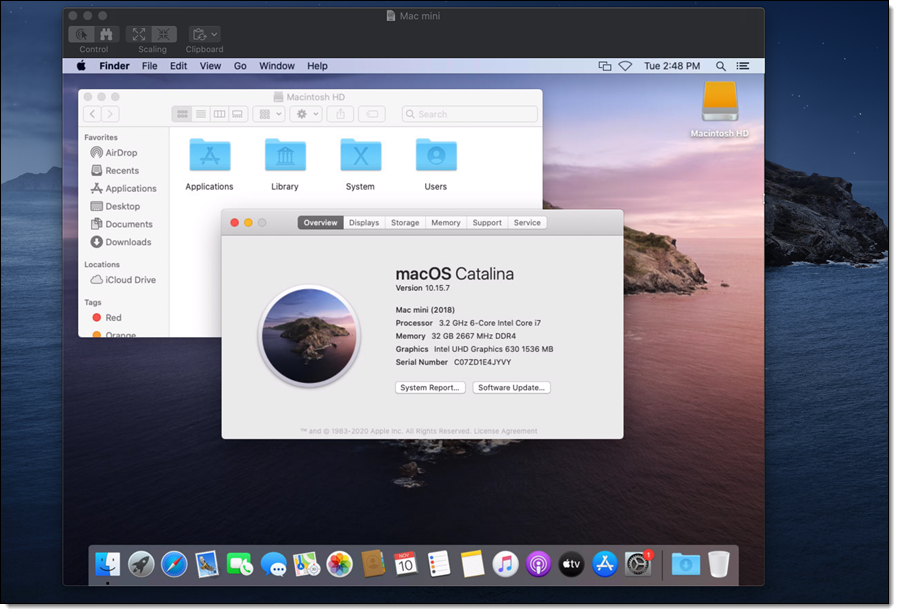
AWS today opened its re:Invent conference with a surprise announcement: the company is bringing the Mac mini to its cloud. These new EC2 Mac instances, as AWS calls them, are now available in preview. They won’t come cheap, though.
The target audience here — and the only one AWS is targeting for now — is developers who want cloud-based build and testing environments for their Mac and iOS apps. But it’s worth noting that with remote access, you get a fully-featured Mac mini in the cloud, and I’m sure developers will find all kinds of other use cases for this as well.
Given the recent launch of the M1 Mac minis, it’s worth pointing out that the hardware AWS is using — at least for the time being — are i7 machines with six physical and 12 logical cores and 32 GB of memory. Using the Mac’s built-in networking options, AWS connects them to its Nitro System for fast network and storage access. This means you’ll also be able to attach AWS block storage to these instances, for example.
Unsurprisingly, the AWS team is also working on bringing Apple’s new M1 Mac minis into its data centers. The current plan is to roll this out “early next year,” AWS tells me, and definitely within the first half of 2021. Both AWS and Apple believe that the need for Intel-powered machines won’t go away anytime soon, though, especially given that a lot of developers will want to continue to run their tests on Intel machines for the foreseeable future.
David Brown, AWS’s vice president of EC2, tells me that these are completely unmodified Mac minis. AWS only turned off Wi-Fi and Bluetooth. It helps, Brown said, that the minis fit nicely into a 1U rack.
“You can’t really stack them on shelves — you want to put them in some sort of service sled [and] it fits very well into a service sled and then our cards and all the various things we have to worry about, from an integration point of view, fit around it and just plug into the Mac mini through the ports that it provides,” Brown explained. He admitted that this was obviously a new challenge for AWS. The only way to offer this kind of service is to use Apple’s hardware, after all.
Image Credits: AWS
It’s also worth noting that AWS is not virtualizing the hardware. What you’re getting here is full access to your own device that you’re not sharing with anybody else. “We wanted to make sure that we support the Mac Mini that you would get if you went to the Apple store and you bought a Mac mini,” Brown said.
Unlike with other EC2 instances, whenever you spin up a new Mac instance, you have to pre-pay for the first 24 hours to get started. After those first 24 hours, prices are by the second, just like with any other instance type AWS offers today.
AWS will charge $1.083 per hour, billed by the second. That’s just under $26 to spin up a machine and run it for 24 hours. That’s quite a lot more than what some of the small Mac mini cloud providers are charging (we’re generally talking about $60 or less per month for their entry-level offerings and around two to three times as much for a comparable i7 machine with 32GB of RAM).
Image Credits: Ron Miller/TechCrunch
Until now, Mac mini hosting was a small niche in the hosting market, though it has its fair number of players, with the likes of MacStadium, MacinCloud, MacWeb and Mac Mini Vault vying for their share of the market.
With this new offering from AWS, they are now facing a formidable competitor, though they can still compete on price. AWS, however, argues that it can give developers access to all of the additional cloud services in its portfolio, which sets it apart from all of the smaller players.
“The speed that things happen at [other Mac mini cloud providers] and the granularity that you can use those services at is not as fine as you get with a large cloud provider like AWS,” Brown said. “So if you want to launch a machine, it takes a few days to provision and somebody puts a machine in a rack for you and gives you an IP address to get to it and you manage the OS. And normally, you’re paying for at least a month — or a longer period of time to get a discount. What we’ve done is you can literally launch these machines in minutes and have a working machine available to you. If you decide you want 100 of them, 500 of them, you just ask us for that and we’ll make them available. The other thing is the ecosystem. All those other 200-plus AWS services that you’re now able to utilize together with the Mac mini is the other big difference.”
Brown also stressed that Amazon makes it easy for developers to use different machine images, with the company currently offering images for macOS Mojave and Catalina, with Big Sure support coming “at some point in the future.” And developers can obviously create their own images with all of the software they need so they can reuse them whenever they spin up a new machine.
“Pretty much every one of our customers today has some need to support an Apple product and the Apple ecosystem, whether it’s iPhone, iPad or Apple TV, whatever it might be. They’re looking for that bold use case,” Brown said. “And so the problem we’ve really been focused on solving is customers that say, ‘hey, I’ve moved all my server-side workloads to AWS, I’d love to be able to move some of these build workflows, because I still have some Mac minis in a data center or in my office that I have to maintain. I’d love that just to be on AWS.’ ”
AWS’s marquee launch customers for the new service are Intuit, Ring and mobile camera app FiLMiC.
“EC2 Mac instances, with their familiar EC2 interfaces and APIs, have enabled us to seamlessly migrate our existing iOS and macOS build-and-test pipelines to AWS, further improving developer productivity,” said Pratik Wadher, vice president of Product Development at Intuit. “We‘re experiencing up to 30% better performance over our data center infrastructure, thanks to elastic capacity expansion, and a high availability setup leveraging multiple zones. We’re now running around 80% of our production builds on EC2 Mac instances, and are excited to see what the future holds for AWS innovation in this space.”
The new Mac instances are now available in a number of AWS regions. These include US East (N. Virginia), US East (Ohio), US West (Oregon), Europe (Ireland) and Asia Pacific (Singapore), with other regions to follow soon.
The pandemic has made it all but impossible for a retail company without an online presence to survive. While companies heavily dependent on foot traffic, like J.Crew and Sur la Table have filed for bankruptcy this year, companies that are expert in e-commerce have thrived, including Target and Walmart. Amazon has gained perhaps the most steam in 2020, attracting roughly one quarter of all dollars spent online by U.S. shoppers throughout the year.
Unfortunately, as more shopping moves online, fraud is exploding, too, and while many startups work with enterprises on the problem — flagging transactions for banks, for example — one New York-based startup, Fakespot, is using AI to notify online shoppers directly when the products they’re looking to buy are fake listings or when reviews they’re reading on marketplaces like Amazon or eBay are a fiction.
We talked earlier today with founder and Kuwaiti immigrant Saoud Khalifah about the four-year-old business, which got started in his own dorm room after his own frustrating experience in trying to buy nutritional supplements from Amazon. After he’d nabbed his master’s degree in software engineering, he launched the company in earnest.
As it happens, Fakespot was originally focused on helping enterprise customers identify counterfeit outfits and fake reviews. But when the pandemic struck, the company began focusing more squarely on consumers on platforms that are struggling to keep up and whose solutions are largely focused on protecting sellers from buyers and not the other way around.
The pivot seems to be working. Fakespot just closed on $4 million in Series A funding led by Bullpen Capital, which was joined by SRI Capital, Faith Capital and 500 Startups among others in a round that brings the company’s total funding to $7 million.
The company is gaining more attention from shoppers, too. Khalifah says that a Chrome browser extension introduced earlier this year has now been downloaded 300,000 times — and this on the heels of “millions of users” who have separately visited Fakespot’s site, typed in a URL of a product review, and through its “Fakespot analyzer,” been provided with free data to help inform their buying decisions.
Indeed, according to Khalifah, since Fakespot’s official founding it has amassed a database of more than 8 billion reviews — around 10 times as many as the popular travel site Tripadvisor — from which its AI has learned. He says the tech is sophisticated enough at this point to identify AI-generated text; as for the “lowest-hanging fruit,” he says it can easily spot when reviews or positive sentiments about a company are posted in an inorganic way, presumably published by click farms. (It also tracks fake upvotes.)
As for where shoppers can use the chrome extension, Fakespot currently scours all the largest marketplaces, including Amazon, eBay, Best Buy, Walmart, and Sephora. Soon, says Khalifah, users will also be able to use the technology to assess the quality of products being sold through Shopify, the software platform that is home to hundreds of thousands of online stores. (Last year, it surpassed eBay to become the No. 2 e-commerce destination in the U.S., according to Shopify.)
Right now, Fakespot is free to use, including because every review a consumer enters into its database helps train its AI further. Down the road, the company expects to make money by adding a suite of tools atop its free offering. It may also strike lead-generation deals with companies whose products and reviews it has already verified as real and truthful.
The question, of course, is how reliably the technology works in the meantime. While Khalifah understandably sings Fakespot’s praises, a visit to the Google Play store, for example, paints a mixed picture, with many enthusiastic reviews and some that are, well, less enthusiastic.
Khalifah readily concedes that Fakespot’s mobile apps need more attention. Indeed, these are where the company plans to spend time and resources following its new funding round. While Fakespot has been focused predominately on the desktop experience, Khalifah notes that more than half of online shopping is expected to be conducted over mobile phones by some time next year, a shift that isn’t lost on him, even while it hinges a bit on the pandemic being brought effectively to an end (and consumers finding themselves on the run again).
Still, he says that “ironically, a lot of [bad] reviews are from sellers who are angry that we’ve given them F grades. They’re often mad that we revealed that their product is filled with fake reviews.”
As for how Fakespot moves past these to improve its own rating, Khalifah suggests that the best strategy is actually pretty simple.
“We hope we’ll have many more satisfied users,” he says.
This morning Salut, an app-based service that allows fitness trainers to host classes virtually, announced that it has raised $1.25 million in a new financing event. The round was led by Charles Hudson, an investor at Precursor Ventures.
Founder Matthew DiPietro, formerly of Twitch, told TechCrunch that Salut soft-launched in mid-September, with a wider release coming today.
DiPietro thought up the concept behind Salut before the pandemic hit, he said during an interview, but after COVID-19 appeared the idea took on new urgency. The company put together what DiPietro described as a no-code alpha version of the service in May to test the market, allowing the then-nascent startup to validate demand on both sides of its marketplace — it’s famously difficult to jumpstart two-sided marketplaces, as demand tends to follow supply, and vice-versa.
The test allowed the company to get to confidence on demand existing from both trainers and exercise fans, and in its initial economic model.
With the new round in the bank and its product now formally launched, it’s up to Salut to scale rapidly. The company currently has 55 registered trainers on its platform, a reasonable start for the seed-stage startup. It will need to grow that figure by a few orders of magnitude if it wants to generate enough revenue to reach an eventual Series A.
But Salut is not focused on early-revenue generation, taking no cut of trainer revenue today. Indeed, per an email the company sent out to its users this morning, the startup is passing along 100% of post-Apple income that trainers generate, or 85% of the gross.
Currently users can donate to, or tip, trainers that host classes. DiPietro told TechCrunch that subscription options are coming in a quarter or two. The startup also announced today that trainers can now allow their classes to be replayed, what the startup called one of its “most requested features.”
Anyone familiar with Peloton understands why this matters; only a fraction of classes on the Peloton ecosystem are live at any point in time, but the bike comes with a library of content that users can simply load up whenever they like. This also allows Peloton to release more niche content than it otherwise might, as even the heavy metal-themed rides can accrete a reasonable ridership over time (something they might not be able to manage if all classes on the platform were only live once and then gone forever).
DiPietro is bullish on building income streams for trainers, especially during a pandemic that has locked many gyms, leaving fitness processionals with little to no income in many cases.
There’s some early signal that users are willing to pay, the company said, with early users willing to pay $5 or $10 for an hour of fitness training. And with a focus on the long-tail of trainers who can’t attract 10,000 fans to a single class, Salut thinks there are a large number of trainers who have enough pull to generate more income from its service, in time, than they could at a traditional studio.
Salut supports group video classes, of course, so trainers can collect monies from cohorts of users at a time.
The company’s fundraising is largely earmarked for engineering, with the company having what its founder called an ambitious product roadmap.
The startup also announced a new project with Fitness Mentors, a company that helps trainers get certified, to create what the two companies are calling “the industry’s first Virtual Group Fitness Instructor (V-GFI) course and certification.”
You can see why Salut would want the certification to exist; its existence will allow users of its service to find trainers that are worth their time on its service, and may raise the overall level of quality of classes provided.
Let’s see how far Salut can get with $1.25 million.
“We think of diversity as a keystone issue for the cannabis industry,” said Curio WMBE Fund managing director Jerel Registre in a conversation with TechCrunch. Registre’s conviction around this program is obvious as he explains the problem the fund is addressing.
The new fund, started by the Maryland-based medical cannabis company Curio Wellness, aims to help underserved entrepreneurs entering the cannabis market. With $30 million to invest, the Curio WMBE Fund is looking to invest in up to 50 women, minority and disabled veterans seeking to open and operate a Curio Wellness franchise with a path to 100% ownership in three years.
Registre tells TechCrunch the goal is to create more diverse ownership through a proven business model. Participants of this program gain access to capital and operational resources.
Curio made a name for itself in Maryland, where it’s the largest cannabis cultivator by market share. Founded in 2014, the family-owned business operates dispensaries rooted in a patient-centric approach. While a legally separate but affiliated entity from Curio Wellness, the Curio WMBE Fund aims to give franchisees access to Curio’s secret sauce.
“In looking at the systemic barriers that women, minorities and disabled veterans face in accessing capital, we decided to develop a solution that directly addresses this massive economic disparity,” said Michael Bronfein, CEO of Curio Wellness. “The Fund provides qualifying entrepreneurs with the investment capital they need to become a Curio Wellness Center franchisee while ensuring their success through our best in class business operations.”
“Let’s bottle the success we have,” Registre added. He likens the franchise model to McDonald’s, where the national corporation gives operators a proven standard operating procedure and ongoing support.
“Our fund is unlike any other in the industry,” Registre said, “as eligible entrepreneurs will have a clear path to 100% ownership in as little as three years. Many other funds rely on a model that utilizes minority entrepreneurs as a vehicle to achieve licenses: The Curio approach flips this model by empowering diverse entrepreneurs and supporting them along the way. If something happens and an investment-funded franchisee defaults, they must be replaced by another minority or woman owner. This ensures these licensees can get the financial support they need to launch while ensuring that the fund’s ultimate mission of supporting diverse entrepreneurs is achieved.”
Registre explained that diversity is central to Curio Wellness, too. Of the company’s 200 employees, 40% are female, and more than half are minorities. At the leadership level, 38% of management is female, and 44% identify as a member of a minority community.
“Diversity is a core asset that we recognize as integral to our success and our future, and that is why we decided to create this investment fund,” Registre said.
The fund provides two phases of support. The first provides capital to franchisees to open their Curio Wellness Center and assist them in obtaining licenses, selecting a location and hiring and training employees. Once the location is operational, the fund intends to provide ongoing support around managing, sales and marketing, store operations, and ensuring employees stay updated on product information.
Curio sees its locations as more than cannabis dispensaries. The company calls them Wellness Centers.
“Curio locations go beyond the traditional experience people have at a medical cannabis dispensary — they are total wellness destinations, under the leadership of a licensed pharmacist,” Registre explains. “Patient wellness is at the center of everything we do and is exemplified by a diverse array of holistic health products, services and educational programming we offer. While additive to the medical cannabis patient experience, these features open the store up to the entire community, not limiting the healthcare experience to only those with a medical cannabis card. This practice, of a patient-first mindset through a pharmacist-led model, allows us to truly lead the pursuit of wellness for everyone who walks in the front door.”
As of writing, the fund has raised half of its $30 million target. The company says the fund intentionally targeted, pitched and secured an investment pool that includes women and minorities. The fund expects to close by the end of 2020, and applications are expected to open in early 2021.